
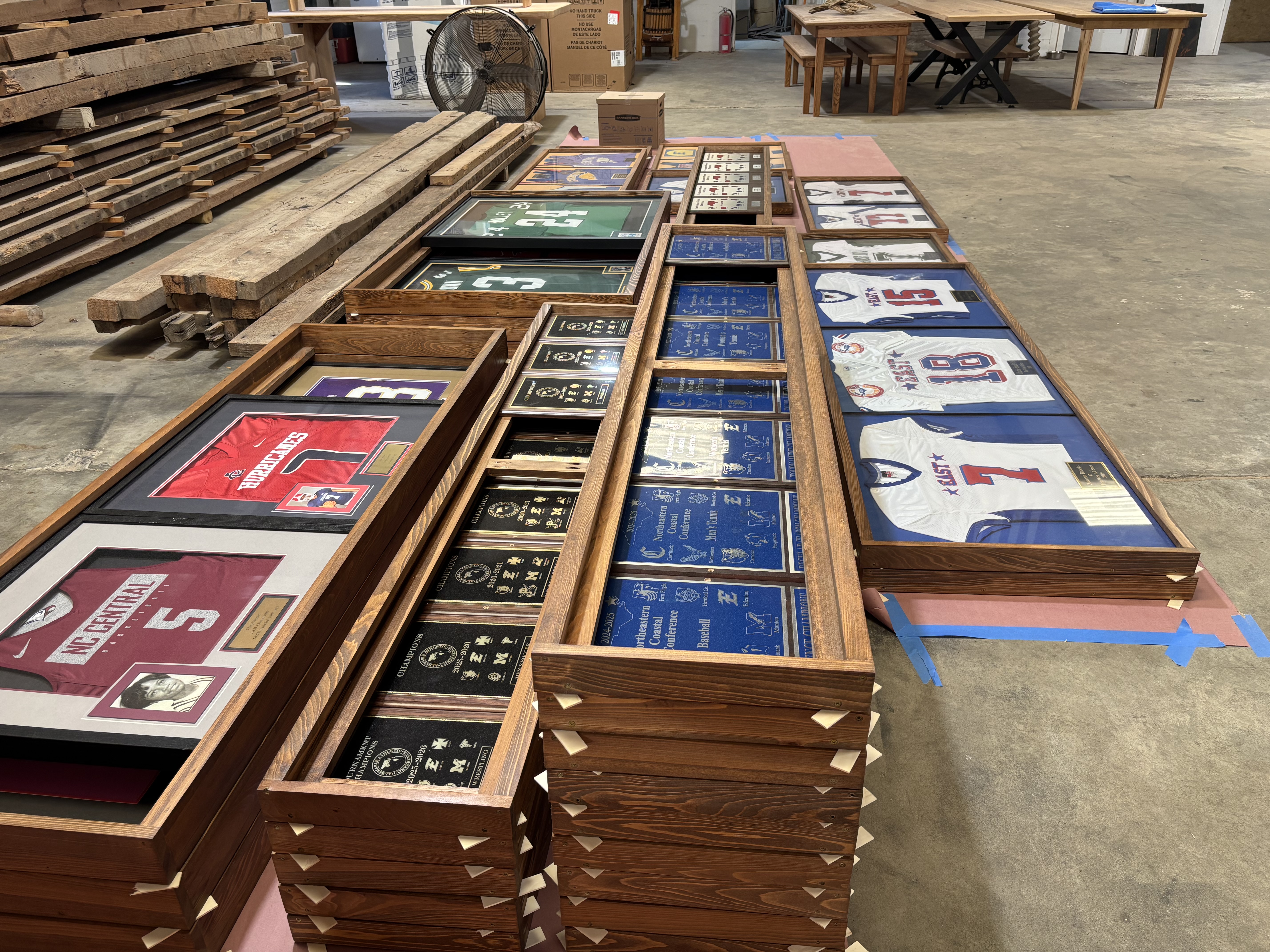
For Belton, the owner and artist behind Rustic to Reclaimed, the assignment grew into a massive woodworking project using 1,000 feet of cypress. The result is a collection of substantial wooden frames designed to protect and bring order to the school’s athletic history.
These are frames within frames. Individually framed jerseys and awards slide into larger protective wooden surrounds, with the collection divided into sections by category. The design brings pieces of different sizes and styles together within a consistent framework while retaining their individual presentations.
Spread across Belton’s studio, the finished sections reveal the scale of the undertaking. Long rows of awards sit alongside broad displays holding several jerseys. Stacks of completed frames rise beside piles of lumber, their warm brown finish highlighting the sweeping grain of the cypress.
The wood provides a striking border for the Aces’ blue and gold, the white jerseys of East-West All-Star participants, and college and professional uniforms represented in the collection.
Among the pieces is a red Atlanta Falcons jersey bearing the name Chesson and the number 81. Its accompanying plate identifies Wes Chesson and his years as a wide receiver from 1971 to 1974. Nearby are framed Aces football jerseys, each with its own identifying plaque.
The collection also reaches beyond the football field. A swimming display includes blue racing shorts, a yellow cap, a medal and a photograph honoring James “Ches” Chesson’s 2008 state championship in the 100-yard freestyle. Other sections hold rows of conference awards recognizing team achievements.
Together, the pieces tell a story of individual accomplishment and shared school pride. Names, numbers, photographs and awards connect the athletes who wore the uniforms with the teams and community they represented.
Accommodating that variety required more than repeating a single frame design. Belton’s wooden surrounds had to fit everything from large jersey displays to smaller award plaques, creating sections suited to the contents while giving the overall collection a unified appearance.
What began with a phone call about a frame became a project measured in a truckload of memorabilia and 1,000 feet of cypress.
For Belton, the finished work puts his craftsmanship around another kind of handiwork: the athletic legacy built by generations of Edenton Aces.