(Editor's Note: This story appeared in the Social Light some months back. With the Commercial Design Guidelines under review we thought it might be enjoyable to revisit one of the town's hands on Historic Preservationists, Andrew Ownbey.)
Historic preservation is often described as a blend of craftsmanship, patience, and historical understanding. Few people in Edenton embody those qualities more fully than Andrew Ownbey, a master craftsman whose work has become closely tied to the ongoing restoration of some of the town’s most treasured historic structures — especially the iconic Cupola House.
Known for his deep knowledge of traditional building methods, furniture making, and architectural restoration, Ownbey has earned a reputation as one of the region’s most respected preservation craftsmen.
Former President of the Cupola House Association Vonna O’Neill holds Ownbey in high regard.
“Andrew has given his heart, soul, knowledge and expertise to the restoration of the Cupola House. He is enormously talented and totally dedicated to preserving historic structures,” said Vonna. “Through his and his team’s efforts, I feel that the house is
being saved for a second time…108 years later. The Cupola House is smiling again,”
For Ownbey, restoration work is far more than simply repairing old buildings. It requires understanding how original craftsmen thought, worked, and solved problems centuries ago. That ability to interpret the intentions of long-forgotten artisans is something preservation leaders say sets him apart.
Executive Director of the Elizabeth Vann Moore Foundation and the Edenton Historical Commission Robert Leath also praised Ownbey’s talents.
“Andrew is a rare talent. Because of his expertise making furniture and building structures from the ground up, he has an exceptional ability to look at an object and practically read the mind of the original craftsman. Not many people can do that,” said Leath.
That philosophy has become increasingly important as restoration work continues at the Cupola House, where preserving historical authenticity often means using techniques and materials that modern contractors rarely encounter. Hidden structural issues, aging wood, and centuries of wear require not only technical skill, but creativity and historical sensitivity.
Supporters of the restoration effort say Ownbey approaches the work with equal parts artisan, historian, and problem-solver. Whether restoring architectural woodwork, stabilizing aging materials, or recreating missing details, his goal is to ensure the home remains as faithful as possible to its colonial origins while protecting it for future generations.
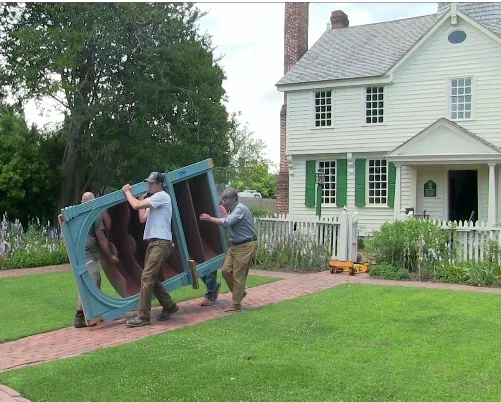
“It has been an honor to work with a master craftsman like Don Jordan on a project as important as The Cupola House,” said Andrew. “He has worked on that house for decades and knows more about it than anyone else alive. It’s also great to have David and Andrew there to take part in the work. It is an experience and opportunity none of us take for granted.”
“Andrew brings an incredible skill set to his work at both Hayes and the Cupola House,” said Sam Dixon, a long-time Edenton resident and a Trustee of the National Trust for Historic Preservation. “Working with Andrew is always both fun and a leaning experience. Andrew challenges us to stretch what is already known by constantly pushing us to do the most accurate and fact-based restorations possible.”
Built in 1758, the Cupola House remains one of the finest examples of Jacobean architecture in the American South and stands as one of Edenton’s most recognized historic landmarks. Current restoration efforts are focused on preserving both the beauty and structural integrity of the building while carefully honoring its original craftsmanship.
For visitors touring the home today, much of Ownbey’s work blends almost invisibly
into the structure itself — often considered the highest compliment in preservation work. The restored details feel authentic because they respect the spirit and methods of the original builders.
In a town where history remains woven into everyday life, craftsmen like Andrew Ownbey serve as caretakers of Edenton’s architectural memories. Through his work, the stories embedded in the town’s historic homes continue to survive — not only in photographs and books, but in the buildings themselves.