
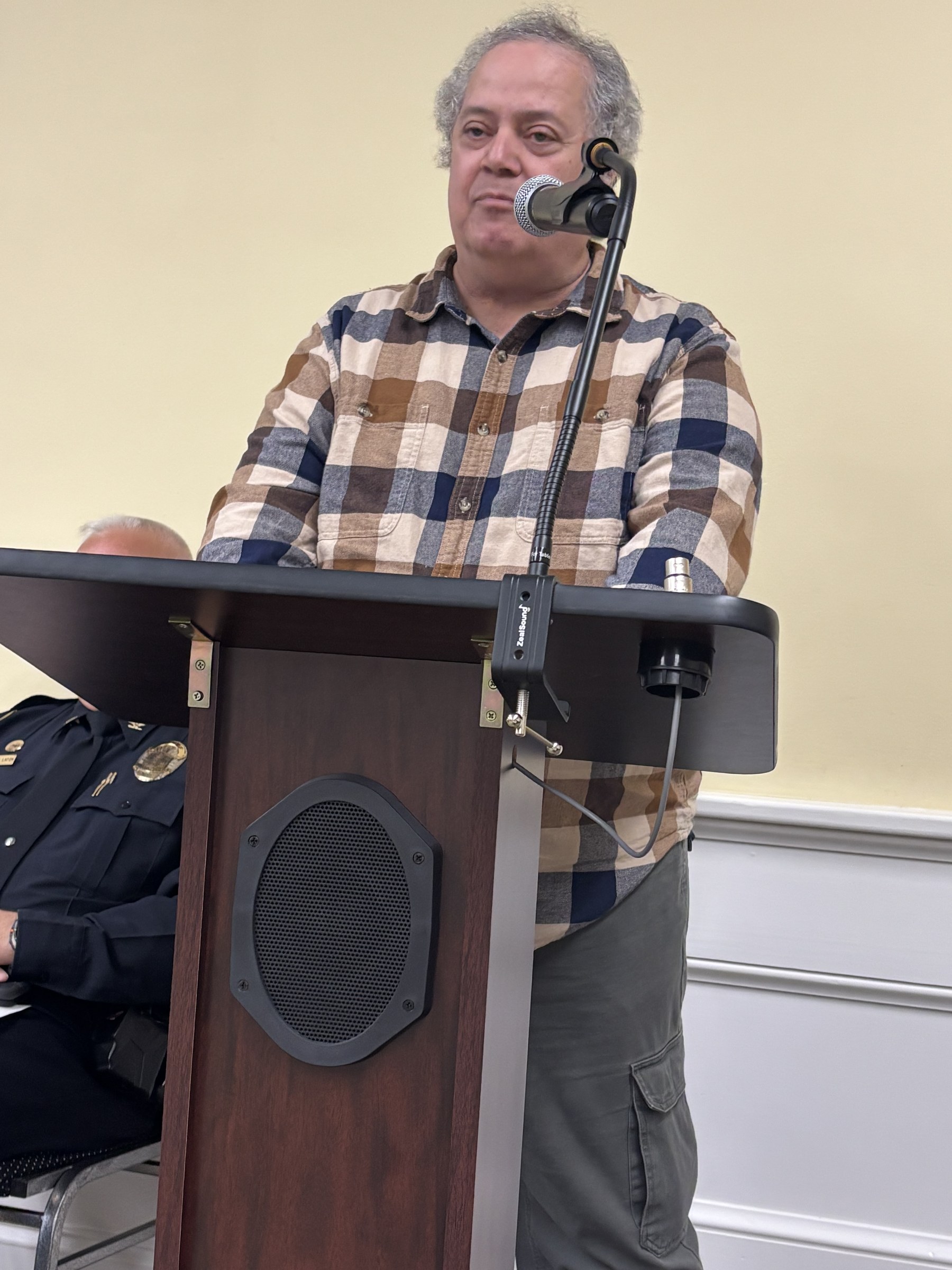
The Edenton Town Council approved a 60-day moratorium on data centers Tuesday, Nov. 10.. Mayor Hackney High said town officials knew of no pending application but wanted the pause in place before a developer could file one. The council will take up the matter again in January, when High said he would support extending the moratorium to as long as a year if called upon to break a tie.
“We need that amount of time to look at it and make sure we get it right,” High said.
The mayor said he saw value in acting that evening rather than waiting another two weeks. Residents who spoke raised questions about how much water a data center might draw, what it could mean for nearby farms and who would pay to clear the site if a developer went bankrupt before construction was finished.
Councilman Patrick Sellers urged the town to draw on the experience of the speakers, three of whom had worked in the data center industry. “It’s obvious from the people that spoke that they have great knowledge on the subject,” Sellers said. He asked whether the council could appoint a commission or working group to help draft the language of a local ordinance.
High also welcomed resident Erin Lambert’s suggestion for a task force. The discussion left open whether residents would advise town staff informally or serve on an appointed panel.
Resident Joe Angelucci urged the council to coordinate its timetable with Chowan County commissioners ahead of their Nov. 23 hearing. He said 60 days would give the two boards too little time to draft rules and reach an agreement on how to protect their shared water supply and power grid.
“Data centers do not respect the municipal boundaries,” Angelucci said. A developer facing stricter requirements inside Edenton, he said, could move just beyond the town limits.
Angelucci proposed a joint town and county advisory board of residents and technical experts to track utility use, review noise complaints and determine whether operators kept their promises to the community. He also urged the town to reject an application if a developer required the town attorney or staff to sign a nondisclosure agreement covering peak power demand, daily water consumption or chemicals associated with cooling.
“Public resources require public records and public notice,” he said.
Angelucci asked the council to require a community benefit agreement before approving a project. A developer might fund science and technology programs in public schools, help upgrade local utilities or provide emergency funds for first responders, he said.
“If they use our resources, they must directly compensate our community,” Angelucci said.
Lambert, who described a 30-year technology career that included sourcing work for J.P. Morgan, Citibank and Bloomberg, said she had overseen data center construction. She asked council members to consider how a facility on the coast would cool its equipment. Would it draw fresh water daily? Could it use a closed-loop system that recirculates water? She wanted officials to examine contamination risks and safeguards for nearby cropland as they considered where a facility might be built.
“What are the effects on agriculture going to be?” Lambert asked.
Lambert suggested bringing town council members and county commissioners together with people who have technology and environmental expertise to determine which concerns apply locally.
“I do believe at the end of the day, the moratorium is probably the right way to go. But let’s get the facts out there,” she said. “There’s a lot of issues with them, but are they all real for us? We don’t know until we actually dig into it.”
Ed Stiver, who said he spent most of his 40-year information technology career in the data center industry, recalled what happened to some communities after the dot-com boom. He had seen partially built facilities and empty data centers, he said, and communities had borne the expense of getting the land back into condition for use or sale.
Stiver urged officials to require surety bonds so money would be available to remove an unfinished building and restore the grounds if a developer went bankrupt. He also favored closed-loop cooling and offered to help the town evaluate technical questions.
Angelucci proposed a bond to cover a different point in a data center’s life. Before an operator received a certificate of occupancy, he said, it should post a bond covering 125 percent of the estimated cost of demolishing the facility and restoring the site. He also called for a plan to keep hazardous heavy metals from discarded electronic equipment out of landfills.