55 Annual Emergency Service Appreciation Banquet
SPILL THE TEA! A ROYALLY GOOD SHOW, FIT FOR A KING
WHISKEY PROJECT GROUP CUTS RIBBON ON NEW WAVE OF CHOWAN INDUSTRY

WHISKEY PROJECT GROUP CUTS RIBBON ON NEW WAVE OF CHOWAN INDUSTRY

PENELOPE BARKER and her fifty friends would be very, very proud. The only thing missing were the klieg lights, a red carpet and Brooks Atkinson at the opening of Laurie Edwards’ highly anticipated musical Spill the Tea! It was the perfect event to unofficially christening of the John A. Holmes Performing Arts Center.
More than 250 years after a group of determined Edenton women challenged British authority with their signatures and convictions, their remarkable story has found a new voice through music, dance and theater.
Penelope and her 50 female friends would be proud.
“Spill the Tea!,” an original musical written and directed by Laurie Edwards, brings the historic Edenton Tea Party and its most recognizable figure, Penelope Barker, to life in a production that blends Revolutionary War history with contemporary storytelling.
Presented at the John A. Holmes Performing Arts Center, the musical revisited the events surrounding the Edenton Resolves of October 25, 1774, when 51 women publicly expressed their support for the colonial boycott of British goods.
Their declaration, now recognized as one of the earliest organized political actions by women in American history, placed Edenton on the map long before women could vote or hold political office.
At the center of the production is Barker, a woman whose leadership, independence and willingness to challenge the established order helped make the Edenton Tea Party an enduring chapter in American history.
Unlike the more familiar Boston Tea Party, where colonists destroyed British tea in protest, Edenton's women made their statement through a written declaration. Their signatures publicly committed them to supporting the colonial resistance through a boycott of British goods.
It was a bold action at a time when women were largely excluded from formal political participation.
Edwards' production explores that courage while placing the Edenton women's story within the broader struggle for American independence.
The musical opens in a schoolroom before transporting audiences to the 1767 Chowan County Courthouse, the Penelope Barker House, London and Revolutionary War battlefields.
The two-act production features scenes depicting the signing of the Edenton Resolves, correspondence between Penelope and Thomas Barker, British aristocrats reacting to colonial unrest and the military conflicts that ultimately secured American independence.
Musical numbers include “Spill the Tea,” “Be Strong, Be Bold,” “Letters from Across the Sea,” “Rise and Be Heard,” and “Find Your Fire.”
One particularly pointed number, “Next, They'll Be Wanting to Vote,” uses the perspective of British authorities to underscore the social and political expectations that women such as Barker challenged.
The musical also ventures beyond Edenton, depicting the battles of Paoli, Waxhaws, Camden and Yorktown, along with scenes featuring George Washington and King George III.
A Revolutionary War suite titled “The Price of Liberty” and a number called “NO KINGS” help carry the production toward its conclusion.
The result is a theatrical interpretation of history that connects the courage displayed in Edenton with the larger struggle for independence.
The production brings together an extensive company of local and regional performers, including experienced actors, musicians, dancers and students.
Alana Jones portrays Penelope Barker, while Alex Kehayes takes on the role of Judge Hawkins and Joe Manley portrays Lord Sandwich. Brendan Hanks appears as both Jack Jones and George Washington.
Christopher Josiah Doss, known professionally as CJ, portrays Lawrence Thomas and King George III. A graduate of James Madison University with a degree in musical theater, Doss has appeared in productions including “Newsies,” “Memphis” and “Footloose.” His participation is through the courtesy of Actors' Equity Association.
Hanks, who earned a Bachelor of Fine Arts in Musical Theatre Performance from Utah Valley University, brings professional performance experience, including work aboard the MSC Virtuosa.
Jones returns to the stage after nearly a decade away from performing. Her background includes musical theater and independent music, and she has expressed a particular interest in storytelling through performance.
Other cast members include Christy Caison, Trish Berg Bartel, Kimberly Dunlow, Makayla Jones, Maren Dix, Bella Smith, Kevin Spragins, Sharon Cole, Samantha Burgess, Betsabe Sayers and Marissa Laffely.
Young performers are also featured throughout the production, helping connect the historic events of 1774 with a new generation learning about Edenton's place in American history.
The combination of experienced performers and younger cast members gives the production a distinctly community-centered character.
Bringing history to life
Behind the scenes, the musical represents a substantial creative undertaking.
Edwards, who wrote the book and directed the production, also shares musical and producing credits with Will Raucci. Sergio Gutierrez is credited with music, and Colleen Brown joins the producing team.
Trish Berg Bartel provided additional direction, Monica Williams serves as musical director, and Marissa Fox is choreographer.
Keith Dix handled sound and video design, while Bartel and Nolan Porter were responsible for lighting design. Raucci designed the sets, and Brown oversees costume design.
The production also relies on an extensive technical crew, costume assistants, stage management personnel and volunteers.
That collective effort reflects one of the production's central themes: history is preserved not simply through documents and monuments, but through people willing to tell its stories.
Community support has also played an important role in bringing the musical to the stage.
Sponsors include Colony Tire & Service, Regulator Marine and Dr. and Mrs. Alex Kehayes. The production has also benefited from assistance from the North Carolina Department of Natural and Cultural Resources, Visit Edenton, Arts of the Albemarle and numerous individuals and organizations.
A story still relevant today
Although the musical takes audiences back more than two centuries, the questions it raises remain familiar.
Who has a voice in government? What responsibilities do citizens have when they disagree with those in authority? And how can ordinary individuals influence events far beyond their own communities?
For Penelope Barker and the women who signed the Edenton Resolves, those questions were not theoretical.
Their declaration carried social and economic implications, particularly in a colonial society where political authority rested overwhelmingly with men.
Their action was not a demand for women's suffrage, but it demonstrated that women could organize, take public positions and participate meaningfully in the political affairs of their time.
By placing Barker's story alongside scenes of British authority, colonial resistance and the Revolutionary War, “Spill the Tea!” gives audiences a broader understanding of the world in which the Edenton women acted.
It also offers an opportunity to recognize the courage of women whose contributions to American independence have not always received the attention afforded to the nation's military and political leaders.
As the United States commemorates the 250th anniversary of its founding, Edenton's historic role in the struggle for independence carries particular significance.
The Edenton Tea Party was a local event with national implications, demonstrating that resistance to British policies extended beyond colonial assemblies and military organizations into homes and communities.
“Spill the Tea!” brings that history out of the textbooks and onto the stage, where the personalities, conflicts and convictions of the Revolutionary era can be experienced through music and performance.
And at the heart of it all stands Penelope Barker, whose willingness to lead a group of women in a public act of political resistance helped establish Edenton's place in the nation's history.
Two hundred and fifty-two years later, her story is still being told — and, through this original musical, sung.
Edenton Tea Party Chapter, NSDAR members join the cast of Spill the Tea to sign the resolve.
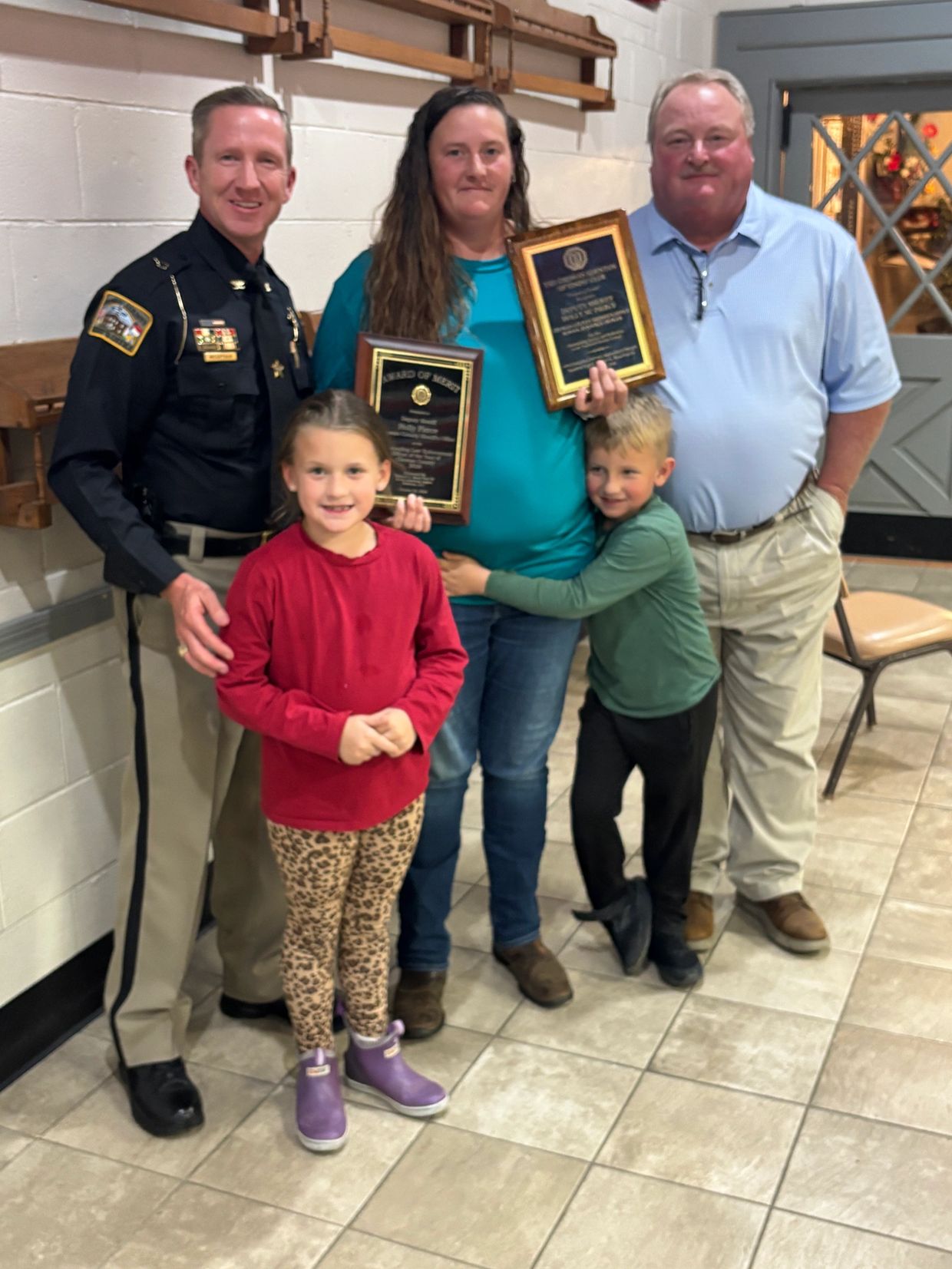
The people Chowan County depend on when emergencies happen gathered Thursday evening for a community tradition recognizing their service.
The 55th annual Chowan County Emergency Services Appreciation Banquet, sponsored by the American Legion Edward G. Bond Post 40 family, was held Oct. 22 in Edenton. The evening recognized service in law enforcement, firefighting, emergency medical care and work with young people.
The evening began with the Pledge of Allegiance and national anthem with Brandy Goodwin signing the anthem. Matt Womble, chaplain for the Chowan County Sheriff’s Office, offered the opening prayer.
Edenton Mayor Hackney High welcomed the crowd.
“This is not the first time that I've spoken to this event. It's one of my favorite events in the year, and I think one of the reasons why I enjoyed it so much is it is just refreshing to be in a room full of people who constantly put service above self. And that's what you, ladies and gentlemen and it does not go unnoticed. I was thinking on the ride out here, I would put our law enforcement locally, our first responders, and all of us gathered in this room up against any in the state,” said High. “And what makes it all the more remarkable is, given the area the state that we're from, you do an unbelievable job with limited resources. You don't have nearly the bells and whistles that some of your counterparts and colleagues have in rich or more populous areas of the state. And that does not go unnoticed either.”
High went on to offer praise to the many first responders in the room.
“I've said this before, but you gathered in this room, have the courage to do things that I don't, you have the courage to do things that most people walking around this town and county don't. And that is, you wake up every morning, knowing that you're putting your life on the line, just so that I and the other members of this community can remain safe.”
Emergency personnel and guests gathered beneath red, white and blue decorations for dinner and the presentation of five awards to four local honorees.
Holly Pierce, a Chowan County Sheriff’s Office deputy and school resource officer, received two of the evening’s honors: Law Enforcement Officer of the Year and the Edenton Optimist Club Youth Award.
The awards brought recognition to Pierce’s work in law enforcement and her role serving young people. Chief Deputy John McArthur presented the Optimist Club award, while Sgt. Kenny White presented the Law Enforcement Officer of the Year Award.
Kevin Briggs received the 4-H Top Cop Award, presented through the Kids and Cops Program. Briggs is a retired North Carolina Highway Patrol trooper who now serves as a middle school resource officer.
The recognition of Pierce and Briggs placed school resource officers among the evening’s honorees, highlighting the connection between public safety and the county’s young people.
Edenton Fire Department Capt. Doug Oliver received the Emergency Medical Technician of the Year Award. Colon Ryan, director of Chowan County Emergency Medical Services, presented the honor.
Timothy Midgette received the Firefighter of the Year Award, presented by Assistant Chief Allen Monds.
The awards represented several parts of the local emergency services community, bringing firefighters, emergency medical personnel and law enforcement officers into the evening’s recognition.
John A. Holmes High School JROTC cadets did a fantastic job serving dinner giving students a role in the annual community gathering.
The banquet’ recognized the demands emergency service places on responders and their families throughout the year. While four recipients received this year’s awards, every Chowan County Emergency Service Employee received a thunderous round of applause for their dedication and service.

Kevin Briggs, is a retired N.C. Highway Patrol trooper and a middle school SRO. He was awarded the 4-H Top Cop Award, presented by the Kids and Cops Program
Doug Oliver, is a Captain with the Edenton Fire Department: Emergency Medical Technician of the Year, Colon Ryan, director of Chowan County Emergency Medical Services presented the award
Timothy Midgette: Assistant Chief Allen Monds presented Midgette with the Firefighter of the Year, award.
Holly Pierce, a Chowan County Sheriff’s Office Deputy and school resource officer was awarded the Law Enforcement Officer of the Year and the Edenton Optimist Club Youth Award .
Proposed data center regulations and a request for a 168-unit multifamily development will be among the items before the Edenton Town Council when it meets Monday, Oct. 26.
The special meeting and committee meeting will begin at 6 p.m. in Council Chambers, 504 S. Broad St.
Council will hold a public hearing on a proposed amendment to the town’s Unified Development Ordinance establishing data centers as a defined land use. The amendment would identify where data centers may be permitted and establish supplemental development standards governing their development.
The agenda calls for a staff presentation, public comment and council questions and deliberations before consideration of the amendment. Public comments during the hearing will be limited to three minutes per person.
A separate public hearing will address an application for a major special use permit for 168 multifamily units in the Medical Arts zoning district at 212 Virginia Road. The agenda identifies the proposal as the Beechwood Subdivision.
Council’s review will include whether the proposed development would endanger public health or safety, injure the value of adjoining or abutting property, remain in harmony with the surrounding area and conform to the town’s adopted plans.
Council also will hold a public hearing on a major special use permit application for a minor subdivision in the Commercial Highway zoning district at 110 Whitemon Lane.
Another agenda item calls for consideration of conditional rezoning at Johnston Street and North Oakum Street. The agenda notes that the public hearing on that request was held Oct. 13.
The consent agenda includes budget amendments concerning an LEO bonus and an AICMO safety grant, along with an Arbor Day 2026 proclamation.
During the committee portion of the evening, the Administration Committee is scheduled to take up Powell Bill mapping and a resolution of abandonment.
Remote video access will be available through Zoom. The meeting ID is 252 482 2155, with passcode 458434. Residents may also dial 301-715-8592 and use the same meeting ID and passcode.


One of Edenton’s most cherished holiday events is the annual Community Christmas Trees displayed throughout the Cupola Gardens. Last year set a record with 27 decorated Christmas Trees from local non-profits, community organizations and businesses spreading holiday cheer. The event is all about sharing your holiday spirit. Each tree shares something about the community, such as celebrating students graduating from John A. Holmes HS and an Angle Tree dedicated to ones we lost this past year. The tree encourages you to add a photo of someone you know who has passed. Each tree tells a different story to share as you walk through the garden.
This year’s theme is, ‘A Christmas Declaration’ celebrating our nation’s 250th birthday, the birth of Christ and the Community Christmas Tree Program’s 10th year anniversary. This is also the 45th Annual Christmas Candlelight Tour.
“The Cupola property occupies 1/6th of the downtown area so this display makes a big impact on our community and visitors,” said Vonna O’Neill the creator of the Community Christmas Tree event. “People roam through the garden from dawn until 9 pm and enjoy the light and decorations on the freshly cut trees; and create some of their own memories during this special event.”
This is a wonderful event to do as a family, a business or an organization. Spread some cheer and become part of the celebration. Vonna O’Neill created the themed Christmas Tree event back in 2016. She supplies the tree stand, LED lights strands and has some extension cords available. Many tree are donated however, you can also purchase your tree from Kelloggs and the Optimist Club and have it delivered by Monday, November 30th morning. Vonna also accepts donations for additional lights, extension cords and trees as needed. This year’s decorating days are Wednesday, December 2nd and must be completed by Thursday morning, December 3rd. For more information: vonna.oneill@gmail.com
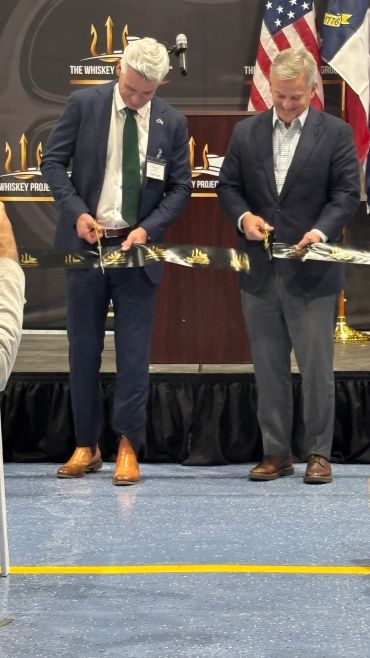
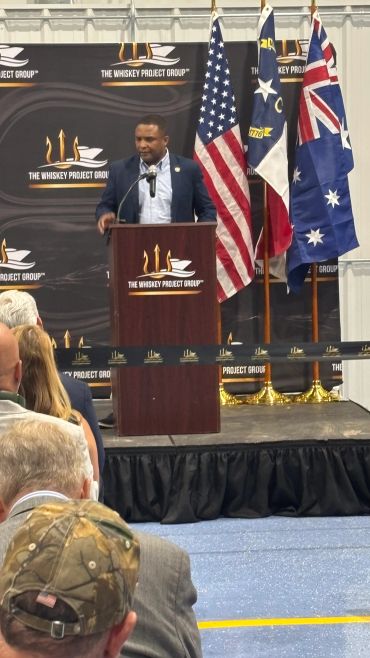
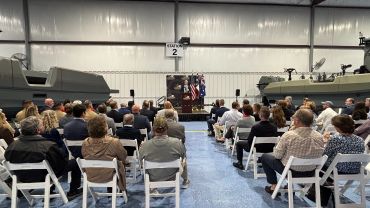
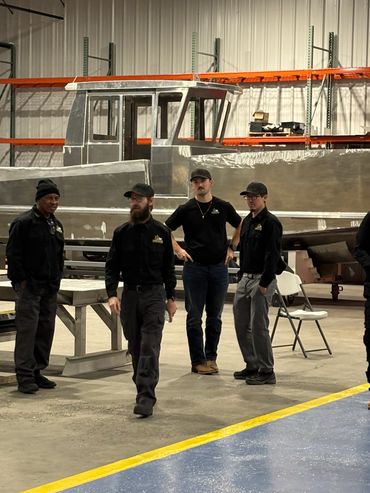
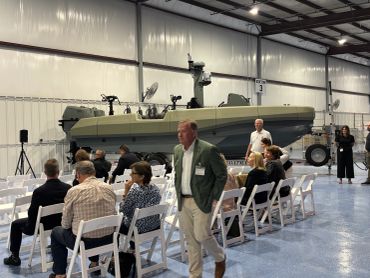
A waterfront ribbon cutting Tuesday marked a new chapter for Edenton manufacturing as The Whiskey Project Group opened a North American facility that will connect northeastern North Carolina workers with maritime customers across the Americas and Europe.
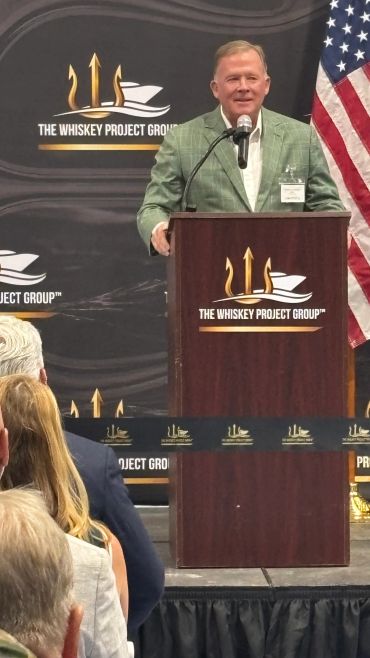
For company founder and Chief Executive Officer Darren Schuback, the occasion also marked another step toward a goal shaped by nearly 25 years of military service: building the boats he wished he had while serving as a Navy frogman.
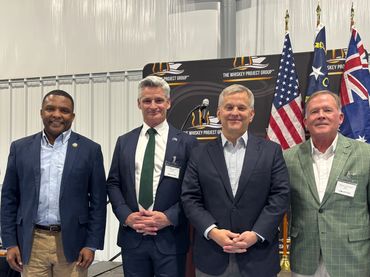
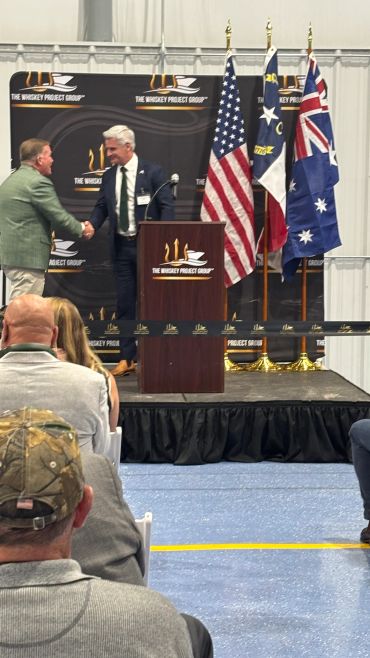
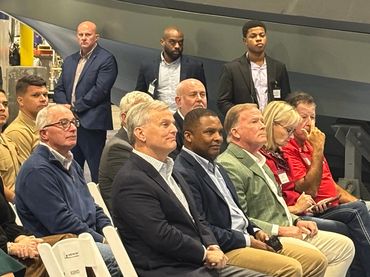
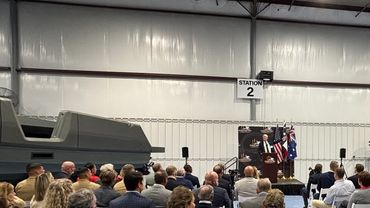
The Australian maritime technology and advanced manufacturing company celebrated the opening at 125 Dye Plant Road with Gov. Josh Stein, state Commerce Secretary Lee Lilley, U.S. Rep. Don Davis, Edenton Mayor Hackney High, company employees and other guests.
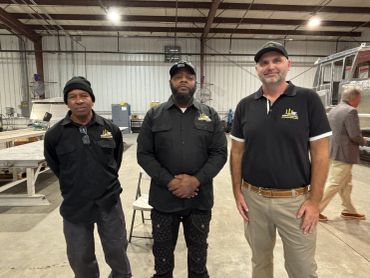
The 60,000-square-foot facility occupies a 50-acre waterfront site and will serve as the company’s primary North American production and sustainment hub. The operation is expected to create 30 new jobs initially, with additional employment anticipated as production develops.
Those positions will include advanced manufacturing, engineering, technical services, vessel repair and maintenance, offering skilled employment opportunities for Edenton and surrounding communities.
Stein described the opening as a new opportunity for Chowan County and the region. In his remarks, he pointed to the potential for employment to grow toward 200 new jobs as the operation expands, with opportunities for engineers and manufacturing workers.
“North Carolina has the skilled workforce, manufacturing expertise, and maritime heritage that companies like The Whiskey Project Group need to succeed,” Stein said in the announcement accompanying the opening. “This investment will bring good-paying jobs to northeastern North Carolina, strengthen our national security, and create new opportunities for the people of Chowan and neighboring counties.”
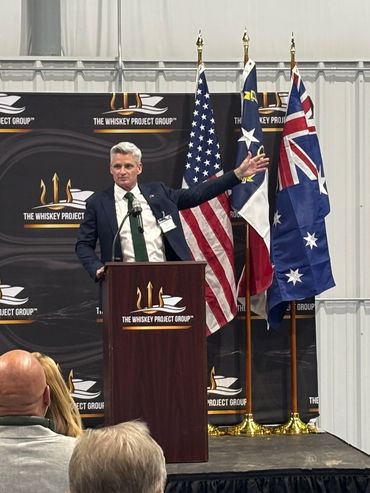
Schuback’s remarks centered on gratitude — for employees and their families, customers who trusted a young Australian company, and a community willing to become part of its future.
His experience operating in demanding maritime environments, he said, exposed him to the consequences when equipment fell short. When he founded The Whiskey Project Group in 2019, his objective was straightforward.
“I had one simple goal: to build the boats that I wish I had while serving,” Schuback said.
That experience helped shape a company focused on designing vessels around the needs of the people operating them, particularly when lives and missions depend on their performance.
What began as an idea has grown into a business serving military, law enforcement, rescue, commercial and other specialized maritime operators. Schuback described the Edenton facility as both an investment in the company’s future and a commitment to the United States.
“This facility represents growth. It represents opportunity. It represents our commitment to the United States,” he said.
But the buildings and equipment, he emphasized, are only part of the story.
“Facilities don’t create success. People do.”
Schuback thanked employees for their work, resilience and commitment, along with the sacrifices made by their families. The finished vessels and public announcements, he said, reveal only part of the effort behind the company’s growth. Less visible are the long hours, setbacks, risks and determination required to reach those milestones.
He singled out the United States Marine Corps for its role in helping the company develop, thanking the Marines and leaders who backed its vision and challenged it to innovate and improve.
The relationship, he said, extends beyond the boats themselves to the capabilities they provide: helping Marines move faster, operate farther and maintain a tactical advantage in demanding maritime environments.
“Our job is simple: to give operators every possible advantage,” Schuback said.
The Whiskey Project Group designs, builds and sustains advanced watercraft for defense, government, commercial and recreational customers. Its Edenton operation combines aluminum and composite vessel manufacturing with repair, maintenance and other services intended to keep vessels operating throughout their working lives.
The governor’s announcement identified Whiskey, NAiAD and VYCOR among the brands the facility will support. They include tactical multi-mission vessels, high-performance rigid-hulled inflatable boats and utility craft.
Establishing production and sustainment operations in Edenton brings those capabilities closer to American customers while creating opportunities to develop local workers and supply chains.
Schuback also acknowledged the Australian embassy and Austrade for helping the company establish connections and expand internationally. He thanked the waterfront property’s owners and staff for their partnership, then turned his attention to the town.
“You didn’t just provide a place to build boats,” he said. “You provided a place to build the future.”
For High, the opening represented the promise of careers that allow residents to develop skills and support their families close to home.
"This is a wonderful day. On behalf of the Town of Edenton, it is my pleasure to welcome The Whiskey Project to Edenton and Chowan County. There is much to be excited about, especially what this project means for our future. Darren, we are delighted that you have chosen Edenton and Chowan County as the home for your U.S. operations."
The mayor thanked the visiting officials for making time to travel to northeastern North Carolina and welcomed the company to Edenton and Chowan County.
High connected that investment to the community’s long-term prospects.
“Their location here means opportunities for our citizens to develop new skills, build careers, support their families, and create a stronger future right here at home — a community where they can live, work, and play,” he said.
Since 2015, eight Australian companies have selected North Carolina for new or expanded operations, accounting for more than 600 jobs and more than $245 million in capital investment.
In Chowan County, the facility joins recent investments in technology employment and downtown infrastructure.
As Schuback looked ahead, he described the opening as a beginning. The vessels built in Edenton will support critical missions, he said, while the jobs will support families and the partnerships will strengthen the community.
The company’s responsibility, he added, is to keep listening to customers, investing in employees and building the vessels operators need.
“We’re proud of what we’ve achieved,” Schuback said. “We’re excited for what comes next, and we’re just getting started.”
Edenton Mayor Hackney High shared this story with the gathering as an opening to his remarks...
....Now, people who know more about these things than I do will tell you it’s always a bad idea to start a speech with a joke. If your attempt at humor falls flat, all the air comes out of the room, and you’re left with nothing.
Well, I’m going to violate that rule, and I need to ask you to do one thing: When I finish telling this story, please laugh.
"Darren, I was relieved that you made light of your beautiful Australian accent, because it ties into the story I’m about to tell. I appreciate you giving me that opening.
As The Whiskey Project was making its transition to North Carolina, Darren spent a tremendous amount of time and energy flying between Australia and Edenton. When he was here, I had several opportunities to meet with him, learn about his personal story and hear more about his company.
I enjoyed getting to know him and looked forward to every opportunity to learn more.
One evening, my wife and I were having dinner at Herringbone. I was telling her about this interesting Australian fellow and the company he wanted to bring to Edenton, which I was very excited about.
As luck would have it, Darren walked in at that very moment.
I said, “Honey, he’s here! I’d love for you to meet him.”
I caught Darren’s eye and waved him over. What I didn’t know was that he had just arrived from a flight from Australia.
He came over, greeted my wife in that beautiful Australian accent and said, “Nice to meet you. I’m actually tired.”
But what I heard was, “I’m actually Todd.”
My face fell. The color drained out of it.
Oh, my goodness, I said. I have to apologize, Todd. I’ve been calling you Darren this entire time.
Darren stepped back and looked at me rather quizzically. My wife rolled her eyes and looked at me like I had three heads—which is not that unusual.
Luckily, she came to my rescue.
“Honey,” she said, “his name’s not Todd. He’s simply trying to tell you he’s tired.”




It was a perfect night for a preservation presentation encouraging future preservationists to participate in Edenton's continued preservation.
Edenton Historical Commission Director of Marketing, Development and Community Events Patti Mordecai along with Commission board members planned the event hosted by Mary Ann and Robert Daniel, Sallie and Ryland Elliott and Caroline and Marshall Ellis. The Barker House Porch overlooking the harbor’s cypress was the perfect platform for the gathering.
The event marked the beginning of a new branch of the Edenton Historical Commission, bringing residents together to help carry the town’s preservation efforts into the next generation.
The cypress tree in Edenton’s harbor is referred to as the Dram Tree with an interesting folklore history.
The society’s name draws on Edenton’s maritime lore. According to local tradition, sailors paused at a harbor cypress known as the Dram Tree to share a small drink of rum and toast a safe voyage, leaving a supply for those who followed. More colorful versions of the legend warn that bad luck awaited crews who neglected the custom.
Young and upcoming area families with a passion for preservation where invited to the event with the hope of attracting new members to participate in the commission.
Held Oct. 15 on the Barker House porch, the gathering introduced the society with cocktails and conversation in a setting closely tied to the commission’s work.
“Preservation for the Next Generation,” was Commission member Charles Davis’ take away message as he outlined the purpose behind the evening. The new branch is being formed to involve the next generation of Edentonians in the preservation of both place and lifestyle.
That mission builds on the work of the Edenton Historical Commission, a nonprofit organization dedicated to preservation projects and education in Chowan County. The commission sponsors the annual Christmas Candlelight Tour, maintains the Barker House Welcome Center and supports other preservation efforts that help make Edenton a special place for generations to come.
The Barker House offered a fitting starting point. As a welcome center maintained by the commission, it connects visitors and residents with the town’s past. Thursday’s gathering turned attention toward the people who will help sustain that work in the future.
The society’s cypress image gives the new organization a distinctly local identity. Standing in the harbor, its roots surrounded by water and its branches spreading above the shoreline view, the tree provides a natural symbol for an organization seeking to grow from an established preservation tradition.
With the launch of the Dram Tree Society, the commission is extending an invitation to another generation to take an active role in caring for the places and community traditions that define Edenton.
An impressive turnout brought a noticeable enthusiasm to the gathering. Chef Cheryl Orr once again provided a flavorful selection of artisan appetizers before some guests enjoyed a trolly tour around town
I
By Darryl Adachi
Sense and Sensibility (2026): A Little Too Raw for My Taste
Let’s start with a brief primer on Jane Austen’s England. In the late 18th century, middle- and upper-class women who did not marry faced a delicate balancing act: maintaining their respectability without the benefit of an independent income. For a woman who remained unmarried into her mid-twenties, marriage prospects could diminish considerably, leaving her with some decidedly unappealing options.
There was, for instance, the fate of the permanent dependent. Unmarried gentlewomen generally lacked the financial means to live independently and often found themselves taking up residence in the households of married brothers, uncles, or brothers-in-law. In exchange for room and board, they were expected to earn their keep as unpaid housekeepers, nurses to ailing relatives, or nannies to their nieces and nephews. Their employment options were limited, too. If family charity ran dry, a gentlewoman had few socially acceptable ways to earn a living without compromising her place in society. Two of the more respectable options were becoming a governess or a lady’s companion.
Such was the predicament facing the Dashwood women—Elinor, Marianne, and Margaret—in Sense and Sensibility. When their father, Henry Dashwood, dies, his estate passes to his son, John, from a previous marriage. John initially intends to provide for his half-sisters, as his father had hoped. But his notoriously selfish and snobbish wife, Fanny, persuades him that giving them a substantial allowance would amount to depriving their own young son of his rightful inheritance. Austen was particularly adept at portraying the original mean girls: women who wielded sarcasm, social ambition, and psychological manipulation to undermine other women. Fanny is a prime example.
Left without a secure inheritance and facing pressure from Fanny to vacate their home, the Dashwood women accept an offer from their cousin, Sir John Middleton, to move to a modest cottage in Devonshire. There, they become acquainted with local society, including Mrs. Jennings, a widowed, exuberant, and relentless gossip who turns out to be a fiercely loyal friend and something of a protective mother figure. They also encounter Colonel Brandon, a bachelor and retired British Army officer whose quiet integrity and steadfast loyalty to the Dashwoods make him one of the story’s more admirable characters.
And this is where the story takes off.
Sense and Sensibility revolves around the efforts of family and friends to encourage the Dashwood sisters toward suitable romantic attachments, with marriage very much the intended destination. At the center of the romantic complications are Edward Ferrars, Elinor’s love interest, and Willoughby, with whom Marianne falls passionately in love. Edward loves Elinor, but personal complications and a powerful sense of honor prevent him from declaring himself free to marry her. For much of the film, we suffer alongside Elinor as she struggles with a painful and complicated mixture of emotions that she largely conceals from her family. Matters are made worse by the fact that Edward is Fanny’s brother, and Fanny fiercely opposes any prospect of a romance between him and Elinor. As for Willoughby, he turns out to be considerably less than the ideal suitor Marianne imagines him to be.
I won’t be giving anything away by saying that Sense and Sensibility ultimately ends happily. Austen’s novels generally tie things up rather neatly, reflecting the conventions of the marriage plot and the novel of manners, in which the restoration of social order and the resolution of romantic entanglements were expected features of the genre. That said, I can offer my thoughts on the film itself, and I’ll try to do so with at least a modicum of literary restraint.
The 1995 adaptation of Sense and Sensibility was nominated for seven Academy Awards, winning one, and it is easy to see why. Directed by Ang Lee and anchored by an exceptional cast that included Emma Thompson, Kate Winslet, Hugh Grant, and Alan Rickman, it remains a particularly appealing interpretation of Austen’s novel. Having seen both versions, I found the 1995 film bright, enchanting, and romantic. The 2026 adaptation, by contrast, appears to favor a darker, moodier atmosphere. The earlier film is celebrated for its warm, lush cinematography, sweeping score, and traditional Regency elegance. The newer version seems to take a more deliberate turn toward gritty realism, with muted colors and subdued lighting replacing much of the glossy perfection associated with its predecessor.
Let’s get nit-picky here.
I waited nearly two hours for the sun to come out. Until the film’s closing moments, virtually every exterior shot, whether in the countryside or in London, seemed to take place beneath a blanket of gray clouds. I’m not sure this is quite the image the British Tourist Authority would choose to promote. And the interiors were hardly more inviting. At times, I found myself wondering, “Were candles really that hard to come by in the late 18th century?” Dinner parties featuring lavish food and elaborate dancing were dimly lit, as were scenes set in virtually every home. The overall effect was so gloomy that I was tempted to reach for the flashlight on my mobile phone. Atmosphere is one thing; making the audience strain to see what is happening is quite another.
Then there is Marianne.
She is certainly not unattractive, but was it the director’s intention to make her look just a little feral? I appreciate the desire to introduce a measure of 18th-century realism but surely combs and hairbrushes were available even to ladies of limited means. Marianne’s hair looked perpetually unkempt, while Elinor appeared to have mastered the art of proper grooming and styling. I found myself focusing on Marianne’s hair in almost every scene in which she appeared. Is this a petty observation? Perhaps. But I have to say that it was distracting.
Whenever I watch a period film set in Austen’s world, I find myself wondering whether there might have been an 18th-century equivalent of the Arthur Murray School of Dancing. There seems to be an unwritten rule that every Austen adaptation must include at least one elaborate dance scene. Perhaps these gatherings provided one of the few socially acceptable settings in which gentlemen and gentlewomen could enjoy a degree of physical contact without inviting scandal. That is all well and good. What fascinates me, however, is the intricacy of the dances themselves. We are not talking about the waltz, the foxtrot, or the cha-cha we might have learned in ballroom dancing classes at school. These dances are highly choreographed, stylized affairs, with intricate steps and precise formations that the participants execute with remarkable aplomb. Where, I wonder, would young women like the Dashwoods have learned all these moves, without the benefit of YouTube tutorials or TikTok videos? It is a question that invariably crosses my mind whenever I watch one of these sequences in an Austen film.
So, what did I think of the film?
For me, it was simply a bit too raw. When I think back to the 1995 Sense and Sensibility and even the 2005 adaptation of Pride and Prejudice, I realize that my taste in Austen period dramas tends toward the more polished and visually sumptuous. I prefer my Regency England with a little more romance, a little less gloom, and perhaps a few better-combed heads of hair. This newer version may, in fact, offer a more realistic portrayal of the hardships and uncertainties facing women like the Dashwoods. Its grittier aesthetic may be precisely what the director intended, and viewers who prefer their period dramas less polished and more grounded may find much to appreciate. As for me, I’ll happily leave it to moviegoers to decide whether this adaptation disappoints or whether it represents a more determined attempt to remain faithful to Austen’s world. Perhaps the director was trying to be, shall we say, Austen-sibly true to the period.