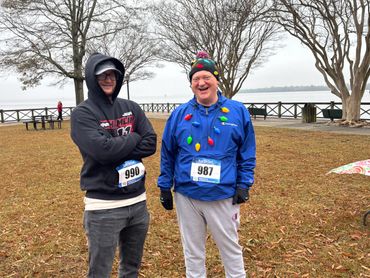
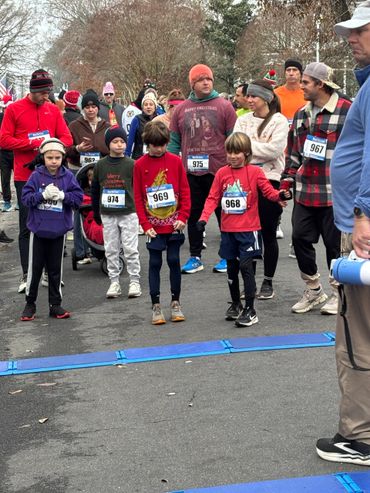
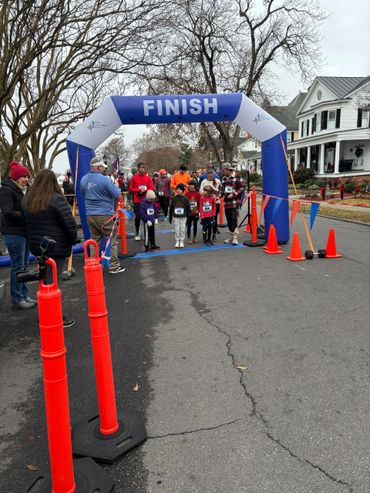
THE REINDEER RUN, THE COLD MORNING TRADITION CONTINUES TO WARM HEARTS




AMERICAN HISTORY AWARDS HIGHLIGHT 'AMERICA 250'

BONNIE HENN WELCOMES ESSAYISTS
Edenton Tea Party Chapter NSDAR Regent Bonnie Henn welcomed members, essay winners, parents, family and educators to the DAR American History Awards luncheon last week.
"Good morning and welcome to the American History Awards luncheon sponsored by the Edenton Tea Party Chapter, National Society Daughters of the American Revolution. It is a special pleasure to welcome the parents of these students, their teachers and mentors who inspire these students and serve as role models in our community," Henn said.
After lunch, the essayists presented their essays and received their awards. To read each of the essays, click the link below.
AVA BUNCH RECEIVES GOOD CITIZEN AWARD
Ava Bunch, was this year's winner of the Chapter's Good Citizen Award.
Every year, the faculty of John A. Holmes High School chooses a senior to receive the Edenton Tea Party Chapter NSDAR Good Citizen Award. Their selection acknowledges the person in the entire student population who best exemplifies the four qualities of a DAR Good Citizen: Dependability, Service, Leadership, and Patriotism.
Ava is an honor student and is on the soccer team. She has been offered places at several colleges and is leaning towards NC State, which both her parents attended. She plans to major in Business Administration, with a future goal of attending Law School.

GRADY SWEENEY, BEST 5th GRADE ESSAY
Grady Sweeney is a fifth grade student at Hertford Grammar School. Grady was joined by his parents, Caroline and Jason Sweeney and his Principal, Dr. John Lassiter. He is the recipient of both the Chapter Award and the District Award for best fifth grade essay.
VIOLET POLLOCK, BEST 7th GRADE ESSAY
Violet Pollo was accompanied by her Assistant Principal, Dr. Sabrina Sears. Violet is no stranger to this ceremony as she was a seventh grade winner last year.
LILLI WELLS, BEST 8th GRADE ESSAY
Lilli Wells, is an 8th grade student at Lawrence Academy. She was joined by her parents, Michelle and Tommy Wells and the Lawrence Academy Head of School, Ms. Katrina Ford.

THE WINNERS, and JUDGES are...
Judges Jay Henn (l) and Earli Willis (r) bookend this years winners, Grady Sweeny, Ava Bunch, Lilli Wells, and Violet Pollo. For the complete essays click the link below. Judge Sally Frances Kehayes could not attened.

CUPOLA HOUSE ARTIFACTS SHOWCASED
WORN, WEATHERED FINIAL, HOUSE REPLICA, GRACE CASE
The Cupola House restoration is not your neighborhood 'get together' to repair the house down the street. A dedicated group of craftsman who have openly claimed "they are honored" to be working on the project are recreating the town treasure and highlighting its original prominence in national history. Their passion for the project is paramount and cannot be emphasized enough. Craftsmen of their standards and skills are not easy to find in today's world of rapid construction.
Edentonians realize the importance and prestige the architectural treasure contributes to the town and the current progress the team of craftsmen are making on the 'down to the bare wall' restoration is remarkable.
According to Cupola House Association President Vonna O'Neill people are almost more excited to see the bare walls and progress being made on installing the original molding now than when the house was intact. The history uncovered is astounding.
Currently on display at the Shepard-Pruden Library are artifacts from Edenton's earliest architecture as a kickoff to the America 250 celebration
The pieces will be showcased through the first week of February and highlight Edenton's iconic colonial architecture, 18 years before the American Revolution while demonstrating the shift from British Sovereignty to American Freedom.
One of the most interesting presentation of the Cupola House findings to date was Jonathan Tobias' venture into the walls of the home a few months ago. Tobias, in a special presentation to a group of NSDAR members, explained what was discovered in one of North Carolina’s most important early structures. Built in 1785 by Francis Corbin, the dwelling is considered a premier example of Jacobean architecture in the southern United States.
Opening its doors and walls to the members and some of their husbands was a special occasion and Tobias’ presentation focused on rare finds behind the plaster.
As Edenton history would have it, even the town rodents, specifically the rats calling the Cupola House home, were historians and hoarders. The small chips of plaster from the walls, over time, signifying different time periods through examining ‘paint chips’ proved historically important. Treasures of the nest, a rodents’ findings, would make a terrific children’s book.
There is sidewalk chatter about a new upcoming page turner.
Over the past year the Cupola house has been taken down to the framing in preparation of reinstalling the first floor original woodwork which has been returned from the Brooklyn Museum. With the framing exposed, it was apparent the Cupola House made way for ‘empty nesters’ but the treasures left behind intrigued local craftsman, preservationists and historians involved in the historic project.
“Considered by many to be North Carolina’s finest colonial house, this will be a rare opportunity for architectural historians to examine the interior carving and study the elements of this remarkable building, right down to the framing,” said Executive Director of the Edenton Historical Commission Robert Leath.
“It should be noted that (as far as we know), this re-installation project is the first of its kind in American history. Never before has a historic house been able to rehabilitate its original woodwork after an absence of over one hundred years,” said Jonathan. ”The other historic homes which had been featured in the Brooklyn Art Museum are no longer standing. The Cupola House is the only one of the historic homes represented in the period room display of the fifth floor at the Brooklyn Museum to remain.”
Everyone in Edenton and surrounding areas are encouraged to visit this once-in-a-lifetime opportunity to see the "bare bones" of the Cupola House interior infrastructure. After the original woodwork is in place, this opportunity will never again be available.
“The mission of the Cupola House Association as a non-profit organization, exists to preserve the past, live in the present, and ensure the future,” said Cupola House Association President Vonna O’Neill.“The 1758 Cupola House and its heritage gardens exist as a living house museum, thus enhancing an appreciation of our country’s mid-Colonial era to our visitors and local community as well as future generations.”
The evening progressed to the Edenton Bay Trading Company where the members enjoyed an
For membership information: https://cupolahouse.org/association-membership/
“The original interior woodwork, which we knew from a 1993 dendrochronology study, is the same age as the exterior woodwork from trees felled in 1756-1757, was a masterpiece of Georgian Neo-Classical carved woodwork in according to the Palladian pattern book published in London in 1748.” CUPOLA HOUSE DOCENT JONATHAN TOBIAS
GET THE GOOD NEWS
Six Speakers Previewed
Blue Skies & Bell Towers, Dawson Tyler Raises Kadesh Tower

Founder of Down East Preservation, Dawson Tyler will be speaking at the Preservation Seminar on the completion of the restoration of Kadesh Church. Over the past three years, DEP has work tirelessly in reconstructing the beloved church, originally built in 1897, by the former enslaved carpenter, Hannibal Badham and his family of carpenters. The Kadesh A.M.E. Zion Church on Grace Street was severely damaged by Hurricane Isabel in 2003. The destruction was so monumental, the building was rendered unusable. Edenton’s most revered African American cultural asset was in danger. It is one of Edenton’s most prized architectural buildings not only for its structural design, but for its provenance. Its endurance and resilience to overcoming mother nature’s challenges are symbolic to all those who realize Kadesh is more than a house of worship, it is sacred ground.
Across the country, there is a national effort to restore historic properties including buildings and important historic homes. As Edenton refines its historic preservation positioning within the national historic preservation efforts, so has Down East Preservation vision been refocused on the future. Dawson is positioning the DEP for long term growth. “Most of the restoration companies we will be competing with are located in Charleston and Boston,” said Dawson. “If you look at the eastern seaboard, we are uniquely located in the center”. For the full story on Down East Preservation future growth plans - Read Edenton Social Light’s Spring issue on news stands April 13th.
Eagles & Arrows Furnishing Hayes with Robert Leath

Finding someone with an understanding of Colonial and early American History, combined with an extensive and distinguished career in both historic preservation and curatorial leadership could have posed a challenge for most municipalities with numerous national treasures under renovation.
Not so for Edenton. Enter Robert Leath.
Edenton resident Robert Leath is a historic preservationist who has spent his career polishing gems, many set on top of stone.
His talent, expertise and watchful eye in the areas of historic preservation are world renowned. His attention to detail and his research into the provenance of the projects he touches repeatedly receive high praise.
He has been focused, since moving to Edenton three years ago, on restoring, renovating and essentially polishing Edenton’s future, it’s historic past.
As the Executive Director of the Edenton Historical Commission and Elizabeth Vann Moore Foundation, Robert leads and closely collaborates with a team of expert artisans, historians, craftsman and consultants. Under his leadership the group has turned historic town dwelling restorations into architectural and cultural advanced history lessons for already well versed historians.
Leath oversees the restoration activities of town’s historic sites that span the better part of two centuries. These include the 1758 Cupola House, the Kadesh Church and Hayes Farm.
Under Leath’s direction, Edenton’s preservation efforts will continue to be a part of the current national effort of preserving the past for future generations.
Fancy Cupola House Discoveries with Andrew Ownbey
Andrew Ownbey specializes in building restoration based in Eastern North Carolina focused on 18th and 19th century structures. Working closely with Robert Leath, the team has made many historical discoveries of eye opening treasures. He will be highlighting those finds as he offers insight into the project.
“The Cupola House had been described as “Jacobean.” But dendrochronology dates of 1757/59 forced us to take a second look. In fact, many of the house’s architectural features relate to the fashionable design trends of the 1750s, Said Ownbey. “Taken all together, the rusticated facade with a center gable, ocular window, and graduated brackets from plain to carved with turned finials, swept eaves, swelled end gable facia and an octagonal cupola, made the Cupola House exterior fancy and whimsical, a la mode with a hotch-potch of pattern book-derived motifs that were both classical and exotic.” Edenton Social Light’s spring issue, on news stands April 17, will feature more details from Andrew on his discoveries.
FRANCES FORD
MICHAEL WORTHINGTON

Frances Henderson Ford has both undergraduate and graduate degrees in Historic Preservation (College of Charleston, 2003; University of Pennsylvania, 2006). She has had a long-standing interest in materials conservation, and in graduate school concentrated in that area, particularly the field of paint and ornamental plaster conservation. She currently works an as independent conservator as well as heading conservation initiatives for Richard Marks Restoration, a nationally known restoration contracting company based in Charleston. In addition to her work focusing on historic interiors, she is much in demand for her skills in cemetery restoration and stone conservation, and has been entrusted with the repair of some of the oldest graves in Charleston.
Frances is an active scholar as well as a practitioner, and has participated in conferences up and down the east coast, as well as internationally, most recently presenting at the 2nd Historic Mortars Conference in Prague, Czech Republic. She has a long-standing interest in the important 19th-century Philadelphia marble mason, John Struthers, and has presented a paper on the Struthers tomb of George Washington at Mount Vernon. She continues to research and document the work of Struthers and his company. She serves as conservation lecturer and laboratory manager for the Clemson/College of Graduate Program in Historic Preservation teaching HP 810 Conservation Lab, HP 811 Advanced Architectural Conservation and HP 819 Investigation, Documentation and Conservation.
MICHAEL WORTHINGTON
MICHAEL WORTHINGTON
MICHAEL WORTHINGTON
Michael Worthington is a dendrochronologist with extensive experience working on both sides of the Atlantic. Among the many buildings he has dated are Mount Vernon in Virginia; the birthplaces of John Adams and John Quincy Adams in Massachusetts; the Josiah Henson Site ("Uncle Tom's Cabin") in Maryland; Drayton Hall in South Carolina; the Officers’ Club at the Presidio in San Francisco, California; and Windsor Castle, Westminster Abbey, and the Tower of London in the U.K. He began his career in buildings as an industrial archaeologist at the Ironbridge Gorge Museum in Shropshire, England. After deciding to specialize in dendrochronology, he received his academic training at Oxford University through a grant from English Heritage. At Oxford he was a member of staff at the Research Laboratory for Archaeology and the History of Art and an assistant tutor on the master's degree course in Archaeological Science. As a co-founder and partner in the Oxford Dendrochronology Laboratory, he spent more than a decade building a series of base chronologies for historic buildings in America. Upon moving full-time to the United States in 2010, Michael opened the Oxford Tree-Ring Laboratory. He currently resides in Baltimore, Maryland..
HAMZAH JULE
MICHAEL WORTHINGTON
MICHAEL WORTHINGTON
Last summer , Hamzah Jule, M.S. Candidate, Clemson University, was interning with the Edenton Historical Commission, where he contributed to the documentation of the Oldest House in North Carolina. His work includes photo documentation and 3D laser scanning to support the development of a framing diagram that captures the building’s structural elements. The resulting data will help inform future preservation efforts and provide valuable insight into the house’s current condition.
Six Speakers Previewed
Blue Skies & Bell Towers, Dawson Tyler Raises Kadesh Tower
Founder of Down East Preservation, Dawson Tyler will be speaking at the Preservation Seminar on the completion of the restoration of Kadesh Church. Over the past three years, DEP has work tirelessly in reconstructing the beloved church, originally built in 1897, by the former enslaved carpenter, Hannibal Badham and his family of carpenters. The Kadesh A.M.E. Zion Church on Grace Street was severely damaged by Hurricane Isabel in 2003. The destruction was so monumental, the building was rendered unusable. Edenton’s most revered African American cultural asset was in danger. It is one of Edenton’s most prized architectural buildings not only for its structural design, but for its provenance. Its endurance and resilience to overcoming mother nature’s challenges are symbolic to all those who realize Kadesh is more than a house of worship, it is sacred ground.
Across the country, there is a national effort to restore historic properties including buildings and important historic homes. As Edenton refines its historic preservation positioning within the national historic preservation efforts, so has Down East Preservation vision been refocused on the future. Dawson is positioning the DEP for long term growth. “Most of the restoration companies we will be competing with are located in Charleston and Boston,” said Dawson. “If you look at the eastern seaboard, we are uniquely located in the center”. For the full story on Down East Preservation future growth plans - Read Edenton Social Light’s Spring issue on news stands April 13th.
Eagles & Arrows Furnishing Hayes with Robert Leath
Finding someone with an understanding of Colonial and early American History, combined with an extensive and distinguished career in both historic preservation and curatorial leadership could have posed a challenge for most municipalities with numerous national treasures under renovation.
Not so for Edenton. Enter Robert Leath.
Edenton resident Robert Leath is a historic preservationist who has spent his career polishing gems, many set on top of stone.
His talent, expertise and watchful eye in the areas of historic preservation are world renowned. His attention to detail and his research into the provenance of the projects he touches repeatedly receive high praise.
He has been focused, since moving to Edenton three years ago, on restoring, renovating and essentially polishing Edenton’s future, it’s historic past.
As the Executive Director of the Edenton Historical Commission and Elizabeth Vann Moore Foundation, Robert leads and closely collaborates with a team of expert artisans, historians, craftsman and consultants. Under his leadership the group has turned historic town dwelling restorations into architectural and cultural advanced history lessons for already well versed historians.
Leath oversees the restoration activities of town’s historic sites that span the better part of two centuries. These include the 1758 Cupola House, the Kadesh Church and Hayes Farm.
Under Leath’s direction, Edenton’s preservation efforts will continue to be a part of the current national effort of preserving the past for future generations.
Fancy Cupola House Discoveries with Andrew Ownbey
Andrew Ownbey specializes in building restoration based in Eastern North Carolina focused on 18th and 19th century structures. Working closely with Robert Leath, the team has made many historical discoveries of eye opening treasures. He will be highlighting those finds as he offers insight into the project.
“The Cupola House had been described as “Jacobean.” But dendrochronology dates of 1757/59 forced us to take a second look. In fact, many of the house’s architectural features relate to the fashionable design trends of the 1750s, Said Ownbey. “Taken all together, the rusticated facade with a center gable, ocular window, and graduated brackets from plain to carved with turned finials, swept eaves, swelled end gable facia and an octagonal cupola, made the Cupola House exterior fancy and whimsical, a la mode with a hotch-potch of pattern book-derived motifs that were both classical and exotic.” Edenton Social Light’s spring issue, on news stands April 17, will feature more details from Andrew on his discoveries.
FRANCES FORD
MICHAEL WORTHINGTON
Frances Henderson Ford has both undergraduate and graduate degrees in Historic Preservation (College of Charleston, 2003; University of Pennsylvania, 2006). She has had a long-standing interest in materials conservation, and in graduate school concentrated in that area, particularly the field of paint and ornamental plaster conservation. She currently works an as independent conservator as well as heading conservation initiatives for Richard Marks Restoration, a nationally known restoration contracting company based in Charleston. In addition to her work focusing on historic interiors, she is much in demand for her skills in cemetery restoration and stone conservation, and has been entrusted with the repair of some of the oldest graves in Charleston.
Frances is an active scholar as well as a practitioner, and has participated in conferences up and down the east coast, as well as internationally, most recently presenting at the 2nd Historic Mortars Conference in Prague, Czech Republic. She has a long-standing interest in the important 19th-century Philadelphia marble mason, John Struthers, and has presented a paper on the Struthers tomb of George Washington at Mount Vernon. She continues to research and document the work of Struthers and his company. She serves as conservation lecturer and laboratory manager for the Clemson/College of Graduate Program in Historic Preservation teaching HP 810 Conservation Lab, HP 811 Advanced Architectural Conservation and HP 819 Investigation, Documentation and Conservation.
MICHAEL WORTHINGTON
MICHAEL WORTHINGTON
MICHAEL WORTHINGTON
Michael Worthington is a dendrochronologist with extensive experience working on both sides of the Atlantic. Among the many buildings he has dated are Mount Vernon in Virginia; the birthplaces of John Adams and John Quincy Adams in Massachusetts; the Josiah Henson Site ("Uncle Tom's Cabin") in Maryland; Drayton Hall in South Carolina; the Officers’ Club at the Presidio in San Francisco, California; and Windsor Castle, Westminster Abbey, and the Tower of London in the U.K. He began his career in buildings as an industrial archaeologist at the Ironbridge Gorge Museum in Shropshire, England. After deciding to specialize in dendrochronology, he received his academic training at Oxford University through a grant from English Heritage. At Oxford he was a member of staff at the Research Laboratory for Archaeology and the History of Art and an assistant tutor on the master's degree course in Archaeological Science. As a co-founder and partner in the Oxford Dendrochronology Laboratory, he spent more than a decade building a series of base chronologies for historic buildings in America. Upon moving full-time to the United States in 2010, Michael opened the Oxford Tree-Ring Laboratory. He currently resides in Baltimore, Maryland..
HAMZAH JULE
MICHAEL WORTHINGTON
MICHAEL WORTHINGTON
Last summer , Hamzah Jule, M.S. Candidate, Clemson University, was interning with the Edenton Historical Commission, where he contributed to the documentation of the Oldest House in North Carolina. His work includes photo documentation and 3D laser scanning to support the development of a framing diagram that captures the building’s structural elements. The resulting data will help inform future preservation efforts and provide valuable insight into the house’s current condition.

FOSHE TAVERN DUEL HItS A BULLSEYE
TWO DAYS OF OLD THYME FUN, LICENSES AWARDED
Although the Tavern Dueling weekend just ended, the enjoyment and the memories of this first time Edenton event will linger, possibly long enough to schedule a second annual event next March.
Sponsored by the Friends of State Historic Sites Edenton, FOSHE President Allison Gottlieb and volunteer members, along with Edenton Historic State Site Manager Laura Rogers
organized the two day tavern duel. The group is receiving high-praise from everyone attending. Participating merchants reveled in the Dueling Tavern theme, donning costumes and preparing items complimenting the event. Think Guinness Beer Bread, Colonial Oatmeal Porter and Penelope Barker Punch.
The Bayside Bakery and Boards attracted a large crowd Friday night as the corner of E. King and S. Broad St. was packed with anxious bread samplers, enjoying the Guinness Beer Bread baker Heather Sexton created for the event. Patrick Sexton emulated times gone by when baker assistants would stand on street corners sampling snippets of bread enticing customers to venture inside and please their palates.Sexton provided samples for local tavern revelers, pulling out all of the stops and vintage attire for the evening. The bakery was shoulder to shoulder with dueling bakery enthusiasts vying for cream filled doughnuts and scones that complimented beer.
Not to be outdone by the neighboring bakers, Greybeard’s Cigar Bar proprietor Thomas Gardener, dressed in authentic tavern garb raised the tavern apron bar, ordering aprons authentically created out of the same styled cotton canvas material as original tavern aprons.
Brian Roberts entered Waterman’s in the duel, offering Colonial Oatmeal Porter along with a Penelope Barker Punch. Roberts would not divulge if anyone ordered both drinks and had a two fisted ‘dual’.
The highlight of the event and the weekend was the gathering at the James Iredell House. The sprawling lawn was the perfect pitch for Bocce and other lawn games. Inside the two taverns, period inspired drinks were enjoyed while there was much historical role play. While one tavern was filled with the smell of hops, the other wafted aromas of coffee brewing.
For participants collecting four merchant marks a reproduction of a wax sealed Tavern License was awarded.
While the event was enjoyed by many participants, raising glasses throughout the event, merchants also appeared to be having an enjoyable evening.. The merchants that participated attracted a crowd and contributed to the flavor and fun of the event.
Gilbert Stuart was putting brush to canvas at the Chowan Arts Council replicating a painting of President George Washington originally painted by Chowan County Commission Vice Chair Larry McLaughlin. The artist - McLaughlin - is a member of the CAC and his work hangs in the gallery. One of the highlights of the weekend was being able to enjoy the Iredell House and its bucolic setting. It was a perfect evening for a garden party in the midst of Dueling Taverns.
OWNBEY, EDENTON DAR LADIES ENJOY CUPOLA HOUSE TOUR
.jpeg/:/cr=t:0%25,l:0%25,w:100%25,h:100%25/rs=w:370,cg:true)
.jpeg/:/cr=t:0%25,l:0%25,w:100%25,h:100%25/rs=w:370,h:493.3333333333333,cg:true)

OWNBEY TALKS CUPOLA
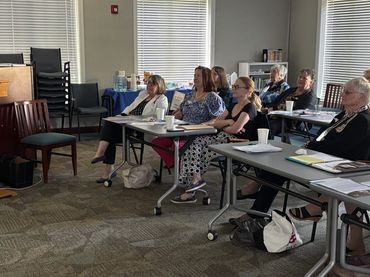
There are few places in Edenton where history feels as present as it does inside the Cupola House, and at a recent gathering of the Edenton Tea Party Chapter NSDAR, that sense of connection was brought to life in a meaningful way.
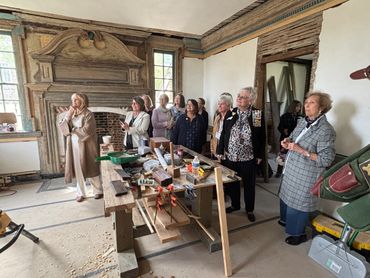
Nationally recognized preservationist Andrew Ownbey addressed members during their monthly meeting, offering an in-depth update on the ongoing preservation efforts at the Cupola House—one of North Carolina’s most significant colonial-era homes. His presentation detailed both the progress made and the careful, methodical work still underway to ensure the structure remains intact for generations to come.
Following the presentation, Chapter Regent Bonnie Henn and fellow members joined Ownbey for a guided tour of the home. Moving room by room, attendees were able to see firsthand the craftsmanship, challenges, and discoveries that come with preserving a structure of such historical importance.
Built in 1758, the Cupola House stands as a rare example of early American architecture, known for its distinctive jutted overhang and the small cupola that crowns its roofline. The home has long been a centerpiece of Edenton’s historic district, reflecting both the town’s colonial roots and its enduring commitment to preservation. Over the years, it has required ongoing care—each generation taking on the responsibility of protecting its integrity.
Ownbey, whose work in historic preservation has earned national recognition, emphasized the importance of maintaining authenticity while addressing structural needs. His approach balances respect for original materials and techniques with the practical realities of safeguarding the building against time and the elements. For those in attendance, it offered a deeper appreciation not just for the house itself, but for the discipline and dedication required to preserve it.
For the Edenton Tea Party Chapter NSDAR, the event aligned closely with its mission of historic preservation, education, and patriotism. The organization, part of the broader National Society Daughters of the American Revolution, has long supported efforts to protect and interpret sites that tell the story of America’s founding era.
By the end of the tour, what remained was a renewed sense of stewardship. The Cupola House is more than a landmark—it is a living piece of history, and thanks to continued efforts like those outlined by Andrew Ownbey, its story is still being carefully preserved, one detail at a time.
SENIOR CENTER FAIR ATTRACTS HEALTHY CROWD
The Chowan County Senior Center welcomed a strong turnout for its recent Health Fair, an event that combined vital health resources with a welcoming, community-centered atmosphere.
Held at the Senior Center on East Church Street, the fair drew close to 100 participants and featured 22 vendors, offering everything from free health screenings to educational materials and wellness demonstrations. Attendees had access to checks for blood pressure, cholesterol, blood sugar, vision, and hearing, along with information designed to support healthier lifestyles and early detection.
At the center of it all was Sandra Taylor, whose leadership and organization brought the event together seamlessly. From coordinating vendors to ensuring a smooth experience for participants, Taylor’s efforts were evident throughout the day. The result was a well-run event that not only informed but also connected residents with critical services available in the region.
Vendors represented a wide network of local and regional providers, each contributing their expertise and time. Among the organizations involved were the Chowan County Department of Social Services, Albemarle Regional Health Department, ECU Health Chowan Hospital, and the Martin-Tyrrell-Washington District Health Department. Their presence ensured that attendees received both practical screenings and valuable follow-up resources.
Sponsors also played a key role in the event’s success, helping to expand its reach and impact. Their support made it possible to offer free services, educational materials, and even wellness-focused extras like smoothie samples and live demonstrations.
Throughout the morning, there was a steady flow of residents engaging with vendors, asking questions, and taking proactive steps toward better health. More than just a series of booths, the Health Fair served as a reminder of what can happen when a community comes together with a shared focus on well-being.
By the end of the event, one thing was clear: thanks to strong participation, dedicated vendors, and the outstanding leadership of Sandra Taylor, the Chowan County Senior Center once again proved itself to be a cornerstone of community health and connection.
LOWE'S & BEHOLD, A GARDEN
For those who enjoy reading in the garden, Edenton can become a public reading room with public gardens aplenty, complete with benches and spots to relax, found throughout town. Soon to become one of the most popular reading gardens in town is only steps away from the fiction section of the Shepard-Pruden Memorial Library.
The new community garden was installed by the Elizabeth City Lowe’s store through a companmy sponsored grant. Librarian Anna Kallas, had known about the community grant program since previously working as a part time Lowe’s employee.
Although the garden had long been a part of the library, it was in need of a freshening, especially since the Cupola House Garden was a neighbor, and when in full bloom it’s vibrancy shadowed the library garden.
Lowe’s team of landscapers and gardeners recreated the setting and the store’s manager saw the community grant through the process.
“Ms. Modesta D. Lamb at the Elizabeth City, NC Lowe’s store passed this grant through Lowe’s for Shepard-Pruden to her supervisors and it was approved,” Kallas said. “Ms. Lamb worked with me regarding a vision for Shepard-Pruden landscaping and community garden.”
Taking the garden initiative one step further, the library is inviting the community to celebrate Earth Month with a hands-on, educational event focused on composting. Scheduled for Monday, April 13 at 4:30 p.m., the program is designed to show how everyday food scraps and yard waste can be transformed into nutrient-rich soil. The initiative aims to empower residents with simple, practical knowledge they can use at home while contributing to a healthier environment.
Participants will learn what materials can and cannot be composted, why composting plays a vital role in reducing waste and supporting the planet, and easy ways to get started regardless of space or experience level. The session is tailored to be accessible and engaging, making it an ideal activity for kids, families, and anyone curious about sustainable living practices. Organizers hope attendees will leave with both inspiration and confidence to begin composting on their own.
Library staff encourage community members to stop by, ask questions, and take part in an activity that blends environmental awareness with everyday action. As interest in sustainability continues to grow locally, events like this offer a welcoming entry point for residents to make a meaningful difference—starting right in their own backyard.
Beyond its environmental impact, composting offers significant benefits for home gardeners. Compost enriches soil by adding essential nutrients that plants need to thrive, improving soil structure and helping it retain moisture more effectively. This means gardens require less watering and fewer chemical fertilizers, creating a more natural and cost-effective growing environment. Healthy soil also promotes stronger root systems, leading to more resilient plants and better yields.
Composting also supports the broader ecosystem within a garden. It encourages beneficial organisms such as earthworms and microbes that naturally aerate the soil and break down organic matter. This living soil environment helps suppress plant diseases and pests, reducing the need for synthetic treatments. Over time, consistent composting can transform even poor soil into fertile ground, making it one of the simplest and most impactful steps gardeners can take to improve both productivity and sustainability

MEMBER MINGLE
More than 35 local business owners and associates gathered in Edenton for the Chamber’s first-ever Member Mingle, an evening designed to foster connection, collaboration, and community growth among small businesses.
The event was opened by Chamber Director Susan Creed, who welcomed attendees and emphasized the importance of strengthening relationships within the local business community. She then introduced Edenton Mayor Hackney High, who greeted the group and underscored the vital role small businesses play in shaping Edenton’s economic future. Mayor High’s remarks set an encouraging tone for the evening, highlighting both the town’s momentum and the value of shared ideas.
Designed as an interactive networking experience, the Member Mingle invited participants to briefly share their business offerings before engaging in deeper conversations. Attendees exchanged ideas, explored potential partnerships, and built new connections in a relaxed setting. With a light supper provided and a strong turnout for its inaugural gathering, the event marked a successful start to what organizers hope will become a cornerstone opportunity for local business engagement in Edenton.
THE CUPOLA HOUSE GETS RUBBED
Historic Molding Recently Rubbed Renderings To Be Auctioned Off
The famed Cupola House has been dissected, inspected, protected, reconnected and its preservation efforts have been perfected. Earlier this week it was rubbed.
On Thursday afternoon members of the Cupola House Association came together to perform the ancient art of rubbing, or frottage. The early origins of frottage can be traced back to ancient and medieval times.While rubbings have dated back to the 2nd century as a way for ancient China scholars to document essential history, Thursday’s gathering at the Cupola House was meant to accomplish a similar task. Recording history through frottage is not only an ancient way to document events, in Edenton its also a way to enjoy an afternoon in one of the towns most important historic projects while preparing to raise funds through the sale of the rubbings at the Cupola sponsored Easels in the Garden.
One of the highlights of the process was depicting which floral attribute from the gardens surrounding the home where originally brought inside, carved into the original molding centuries ago throughout the home to enhance natures visit inside. The recent rubbings highlight the floral blooming in the Cupola House’s gardens.
The rubbings will be offered for sale through a private silent auction during the Easels in the Garden event. The technique was revolutionized by surrealist artist Max Ernst in the 1920s. He coined the term frottage, rom the French frotter, meaning “to rub”.
The process is relatively simple. Place rice paper over textured surfaces, rub with a pencil or charcoal until the desired image is obtained.
With the recent return of the original Cupola House woodwork and molding from the Brooklyn Museum the event was a frottage artist’s dream.
To view the recent rubbings make sure to attend Easels in the Garden, April 17 & 18.
Subscribe to our newsletter
Sign up for our newsletter to receive the latest news and updates straight to your inbox.

The Curator of the Cupola house
VONNA O'NEILL LIGHTS UP EDENTON
Vonna O’Neill lights up Edenton
It’s only fitting Edenton has it’s own ‘Miracle on Broad Street and appropriately the recent development at Edenton’s Cupola House could make that dream a reality.
When Vonna O’Neill became President of the Cupola House Association three years ago she had already achieved an extensive list of accomplishments while traveling the world as a global marketing director for a major telecommunications company.
However, her legacy as a preservationist and President of the Cupola House Association may top the list. It was O’Neill’s creative expertise leading to Edenton’s most recent tradition prominently displayed in the gardens in front of the Cupola House.
“Eight years ago, I started the Community Christmas Tree Program for Edenton which at this point is a tradition. Originally, we had ten trees donated and decorated by various groups in town and they were located by the waterfront,” noted O’Neill, adding, “Five years ago, we re-located them to the Cupola House Gardens, it was more protected from the elements and provided a more cohesive display.”
While O’Neill’s creativity and the support from holiday volunteers light up Edenton during the holidays, it’s O’Neill’s preservationist’s perserverance that has recently brought increased prominence to the famous architectural gem overlooking the harbor.
“As president of the Cupola House Association, Inc. for the past three years, I have had the great pleasure to work with an outstanding Board in making dramatic progress to further the preservation efforts of the Cupola House and Gardens. We are now at a major crossroads of changes that will affect the intrinsic historic value of the Cupola House story for a very long time,” advised O’Neill. “With the successful procurement of the original first floor woodwork back from the Brooklyn Museum after 106 years, that event alone has resulted in plethora tandem preservation projects to return the Cupola House to it's original state.”
Plans are underway to build a two story kitchen where it was originally located when Francis Corbin built the house. There are additional plans to put the widow's walk around the Cupola back in place; remove the clapboards on the house and put the rusticated siding back in it's place.
“As part of this whole process, we are actively seeking funds to support filming a historic documentary on the marvels of the Cupola House, the inhabitants, founders of the Association and the continued efforts to lead the preservation efforts in the center of downtown Edenton. We are calling this, "Miracle on Broad Street", said O’Neill.
Become part of the community
If you like reading the profiles on Edenton's "Women making a difference".... you'll enjoy our regular updates on the people and activities of Edenton.
DAR STATE VICE-CHAIR, 250 CELEBRATION
Sally Frances Kehayes
History is embedded in Edenton resident Sally France Kehayes’ soul.
A member of the Daughters of the American Revolution, currently serving as the DAR State Vice-Chairman for Edenton’s 250 celebration, Kehayes has always had her focus set on the past and the future.
“Preservation is progress, an expression that describes Edenton’s emphasis on our history as seen in architecture and culture” explained Kehayes. “ Cultural tourism is a fascinating aspect of life in Edenton. Celebrating the 250th anniversary of the signing of the Edenton Resolves is a way to bring people into Edenton, to learn and enjoy all that is offered here.”
Before moving back to her husband Alex’s hometown, Kehayes had an intense professional career of 30 years working with children with life-threatening and chronic illnesses. She offered help to the families providing emotional care to them during their hospitalizations. When she and her husband retired the couple decided to move back to Edenton to enjoy the lifestyle.
“Edenton was an opportunity to do different, less intense activities. I have always enjoyed history and community involvement so I became a volunteer. I have been intrigued by the story, and history, of the 51 women who signed the Edenton Resolves since I first moved to Edenton. I knew Miss Elizabeth Vann Moore who did the first research, using primary sources, to document what became known as the Edenton Tea Party. Her papers were given to the Joiner library at East Carolina University. I have spent many, many hours there engrossed in reading her work.”
A past chairman of the Edenton Historical Commission and currently the co-chair for the Community Outreach and Special Events Committee Kehayes is immersed in Edenton activities.
“I believe it is important to know our history, as individuals, communities, and country. An absolute strength of Edenton is the willingness of individuals to be involved in every aspect of our community. So many volunteers work with non-profit efforts to ensure the vibrancy of Edenton. The volunteers who have worked on the events during this past year and the organizations and people who are putting the events together for Oct 25 and 26 are to be congratulated for all they have accomplished,” said Kehayes.
Join our community
Connect with Edenton's personalities, community events and historical efforts with the people who share their passion for Edenton.